TL;DR: If you collect personal data or use cookies, a privacy policy is legally required. If you don’t, you should still have one to show visitors you take their privacy seriously.
This post is an introduction to privacy policies. It may not cover all the laws you are subject to. We encourage you to discuss specific issues with your lawyer if you have any concerns about what applies to you and what actions to take.
- Why should I create a privacy policy?
- Do I need a privacy policy on my website?
- Do I need a privacy policy because of Plausible Analytics?
- How do I create a privacy policy for my website?
Privacy-first analytics with no cookies and no consent banner required
Why should I create a privacy policy?
A privacy policy is a legal document that informs your website visitors and explains what kind of personal data you collect about them, how you do it and what it’s used for.
Having a privacy policy in place when you collect or store personal information is required by many laws around the world, including the US and the EU.
Many third-party services commonly used on websites (analytics providers, advertising companies, payment processors and so on) also require a privacy policy to be made available according to their terms of use.
Failing to have one when required can result in regulatory fines, account suspension by third-party services and loss of visitor trust.
Do I need a privacy policy on my website?
You probably need a privacy policy. If your website collects any personal data directly or indirectly using third-party services, you legally need one.
Most websites do collect some type of personal data. Sometimes you, as a site owner, may not even be aware that a third-party service you use collects personal data or places cookies on the devices of your visitors.
This is why we recommend adding a privacy policy even if you don’t collect any personal data. It lets you explain the steps you’ve taken to protect visitor privacy, which builds trust and shows you take it seriously.
Google Analytics requires you to have a privacy policy
Google Analytics requires a privacy policy in its terms of service. If you use Google Analytics and don’t have one, you’re in breach of your contract with Google:
“You must post a Privacy Policy and that Privacy Policy must provide notice of Your use of cookies, identifiers for mobile devices or similar technology used to collect data. You must disclose the use of Google Analytics, and how it collects and processes data”
Cookie consent banners are not the same as a privacy policy
A privacy policy and a cookie consent banner are different requirements. A privacy policy explains what data you collect and why. A cookie consent banner is a separate requirement under the EU’s ePrivacy Directive, which requires you to get user consent before placing non-essential cookies on visitor devices.
If you use cookies for analytics or advertising, you likely need both.
Do I need a privacy policy because of Plausible Analytics?
Plausible Analytics is a privacy-first web analytics tool. It complies with privacy regulations such as GDPR and CCPA. Plausible doesn’t use cookies and doesn’t collect personal data.
If you don’t collect or process personal data and don’t use cookies, you may not legally need a privacy policy for your use of Plausible Analytics, though requirements vary by jurisdiction.
Still, we recommend you have a privacy policy on your site and add a note about your use of Plausible Analytics to it. You can explain how you use Plausible and what data Plausible collects about your visitors.
You can link to our data policy or quote from it directly.
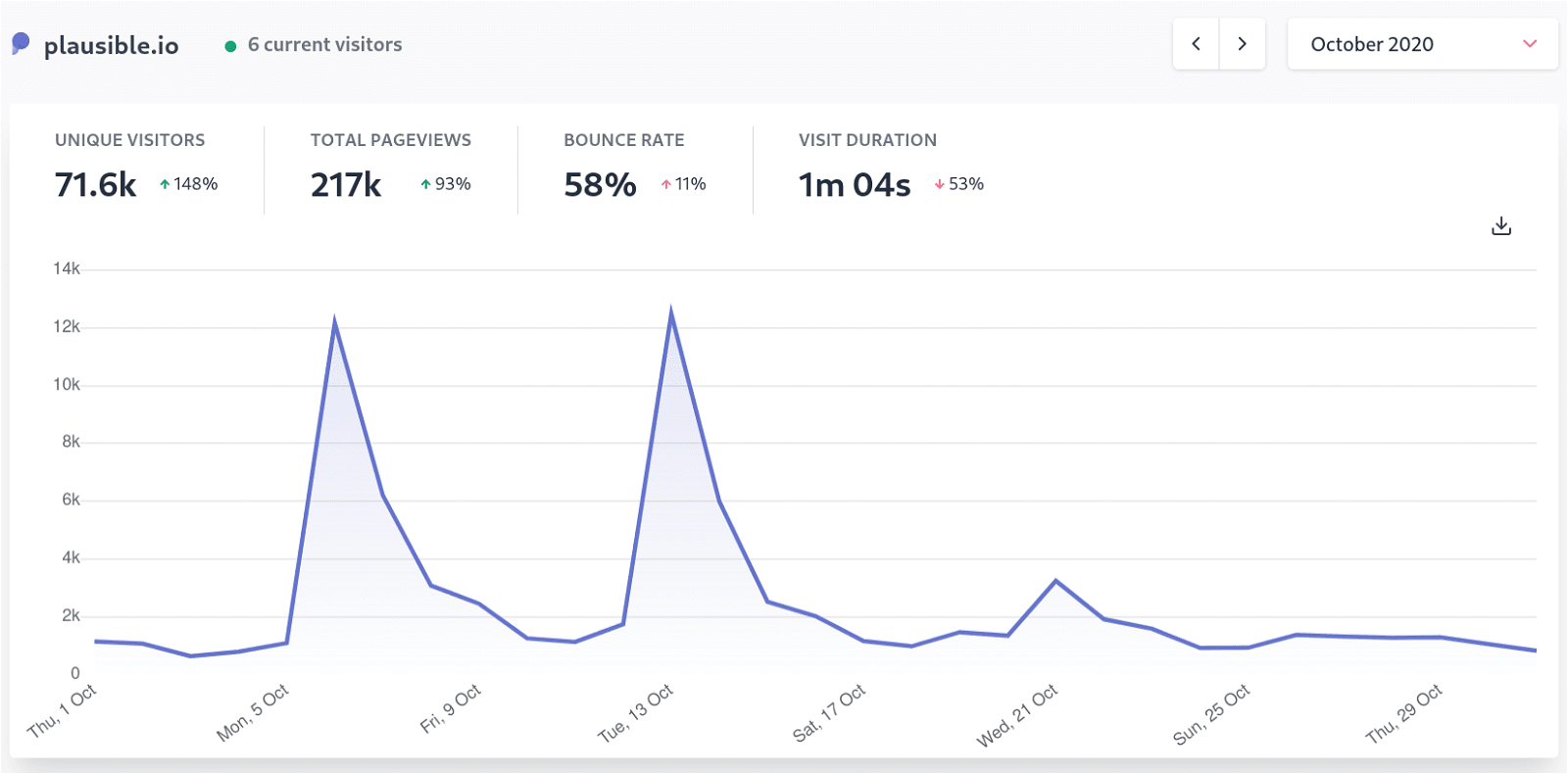
You could even open up your Plausible dashboard to the public and link to it from your privacy policy page or another location on your site. This gives your visitors access to the same data you see.
Here’s an independent legal assessment on GDPR-compliant web analytics without consent written by an experienced data protection expert and lawyer.
Privacy policy examples
Here are some customers who’ve mentioned Plausible in their privacy policies.
Stripe names Plausible as the analytics tool for its Sessions website in its event privacy notice:
Cookies are not used and no personal data is collected.
Here’s how Oatly mentions us:
All users visiting our website - including visitors clicking ”No thanks” Anonymous analytical data will be stored to Plausible, in order to track the usage of a website without collecting any personal data or personally identifiable information. Cookies are not set and all data is in aggregate only.
System76 discloses their use like this:
Our website uses Plausible Analytics to help us understand visitor trends and the effectiveness of our marketing outreach. We chose Plausible Analytics because it is a privacy-focused company and platform that eschews personally identifiable information in favor of anonymous aggregate data. See the Plausible Analytics Data Policy.
The Steve Jobs Archives website handles it this way:
Analytics Partners. We use analytics services such as Plausible Analytics to collect and process certain analytics data. To help us understand how you use our Services and to help us improve them, we automatically receive information about your interactions with our Services, like the pages or other content you view and the dates and times of your visits.
And an example from the privacy policy of The Scottish Government:
Additionally, we use Plausible Analytics on this site to collect some anonymous usage data for statistical purposes. This is to track overall trends in our website traffic, not to track individual visitors.
The Rails Foundation in their privacy policy:
The Rails Foundation is committed to ensuring the privacy of our website visitors. To achieve this, we use Plausible as our web analytics tool.
elementary OS goes into more detail:
We use the open source Plausible Analytics routed through our stats subdomain to count website visits, downloads, etc. You can see the same data we can see on the public dashboard. No cookies are used and no personal data—not even an IP address or browser user agent—is stored. For more information, see the Plausible Data Policy
And the Coalition for App Fairness in their cookie policy:
We use Plausible Analytics to track overall trends in the usage of our website. Plausible Analytics collects only aggregated information, which does not allow us to identify any visitor to our website. For more information, please visit the Plausible Analytics Data Policy.
Andrew Mason on his personal website keeps it candid:
I am using Plausible Analytics, which is a GDPR, CCPA and cookie law compliant site analytics tool. I don’t care who you are, I just am curious how you are using the site, so that is why I chose a privacy focused tool and for that reason, I have made my analytics dashboard public so that you can see exactly what is being gathered.
Gergely Orosz takes a different approach with a public /stats/ page:
I integrated Plausible analytics on this site. On top of the very small footprint of the analytics script and no-tracking-and-not-selling-your-data-for-advertising part, a really neat thing is how you can make your dashboard public. Here is the dashboard for The Pragmatic Engineer with public (and live) visitor information, and historic stats.
How do I create a privacy policy for my website?
What should a privacy policy include?
Different laws require different disclosures. Describe what personal data you collect, how you collect it and what you use it for. List third-party services, what you use them for and link to their privacy policies for further details.
Include at minimum:
- your official business name
- your contact information
- personal data you collect
- cookies you use
- reasons why you collect personal data
- how you collect personal data and which services you use to do so
- what you use personal data for
- whether you share personal data with third parties
- how you secure it and how long you keep it
- how visitors can opt out of personal data collection
- how visitors can download any personal data already collected about them
- the date that the privacy policy was last updated
Where should I put the privacy policy on my website?
Don’t hide your privacy policy. Put it in your site footer or include a link to it on your about page.
Your privacy policy should be easy to read
A privacy policy written in plain language builds trust. According to the GDPR, information about data collection should be clear and user-friendly. Specifically, it should be:
- concise
- transparent
- intelligible
- easily accessible
- in clear and plain language
- delivered in a timely manner
- free of charge
When should you update your privacy policy?
Review and update your privacy policy whenever you add a new service that collects data, remove an existing one, or when relevant laws change. The last-updated date helps visitors see if anything has changed recently.
Privacy policy template
Basecamp has open-sourced its privacy policy, terms of use and other legal documents.
You’re free to use their policies under the Creative Commons Attribution license. Start from their template and adapt it to your situation.
If you prefer a more guided approach, tools like Iubenda and Termly can generate a privacy policy based on your answers to a set of questions and help keep it up to date as laws change.